

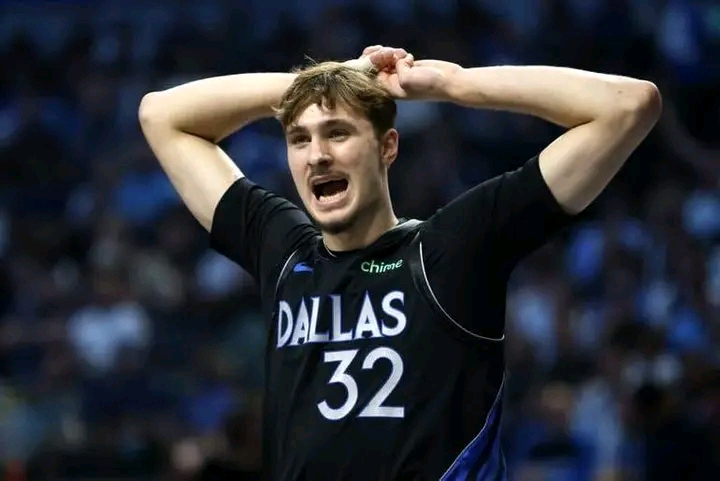
The early verdicts are already flying. Missed shots. Awkward possessions. Growing pains under bright NBA lights. For some observers, that’s enough to sound alarms about Cooper Flagg’s transition. But inside Durham — and among those who watched him closely at Duke — the reaction is very different. There’s no panic. In fact, there’s a quiet confidence that the league is misreading what’s right in front of it.
Duke fans have seen this version of Flagg before.
They remember the stretches where his offense looked disjointed, when his rhythm seemed just a half-step off. And they remember what followed every single time: adjustment, intensity, and dominance. Flagg has never been a player who peaks instantly. He studies. He absorbs. Then he attacks.
What the NBA box score doesn’t capture is what made him special in college. His impact was never limited to scoring bursts. It was the defensive timing, the off-ball instincts, the willingness to do the dirty work while figuring out the game’s next level. Those traits don’t disappear when the shots aren’t falling — they compound.
At Duke, Flagg often looked like he was playing chess while others were sprinting. Early struggles weren’t signs of weakness; they were evidence of him processing the game faster than most. When the switch flipped, it flipped hard. Opponents felt it. Coaches adjusted for it. Fans expected it.
That same pattern is unfolding now.
NBA defenses are longer, faster, and more physical. The spacing is different. The margin for error is thinner. But Flagg’s growth curve has never been linear — it’s been exponential. Duke fans know that once he finds his comfort zones, the conversation shifts from “Is he ready?” to “How do you slow him down?”
There’s also the leadership element that numbers don’t show. Even as a rookie, Flagg’s competitiveness and communication stand out. He doesn’t hide. He doesn’t shrink. He leans in. That mindset carried Duke through tense moments and hostile environments, and it’s the same foundation he’s building on now.
So while the national chatter nitpicks every missed jumper, those who watched his rise aren’t surprised. They’re waiting. Waiting for the stretch where the game slows, the confidence spikes, and the same relentless edge resurfaces.
The panic is loud. The patience is quiet.
And if Duke history is any indication, the NBA may soon realize it’s been watching the calm before Cooper Flagg’s next surge.
