

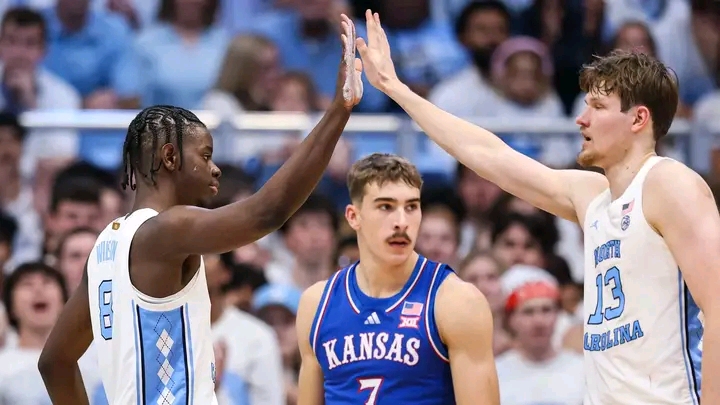
The aftermath of North Carolina’s instant classic against Ohio State has taken on a life of its own, and at the center of it all is Caleb Wilson. What began as a thrilling win has quickly turned into a talking point across the college basketball world, not because of the final score, but because of what Wilson said once the lights dimmed and the noise settled.
According to insiders around the program, Wilson’s postgame message carried far more weight than a typical celebration. There was no chest-thumping, no emotional victory speech. Instead, his words were measured, deliberate, and loaded with intent. Those close to the team describe it as a promise — one that reflects a growing belief inside the locker room that North Carolina is only scratching the surface of what it can become.
The Ohio State game exposed flaws, created tension, and pushed UNC to the brink. Rather than shy away from that reality, Wilson leaned into it. Insiders say he emphasized discipline, late-game execution, and the importance of surviving uncomfortable moments. The message wasn’t about how good UNC looked — it was about how much better they expect to be.
That tone has reportedly resonated throughout the roster. Coaches and players alike viewed the win not as validation, but as evidence that the team can endure pressure without losing its identity. Wilson’s words reinforced the idea that close games aren’t a problem — they’re a proving ground.
What’s striking is how quickly the narrative shifted. A dramatic win could have fueled hype and headlines. Instead, Wilson’s message redirected the focus inward, setting a higher standard for effort, focus, and accountability. Insiders believe it marked a subtle but significant change in leadership dynamics, with Wilson asserting himself as a voice of purpose rather than reaction.
As North Carolina moves forward, that promise looms large. The Ohio State classic may be remembered as the night UNC survived. But if Wilson’s message holds true, it may also be remembered as the night expectations quietly changed — from hoping to win big games to expecting to finish them.
